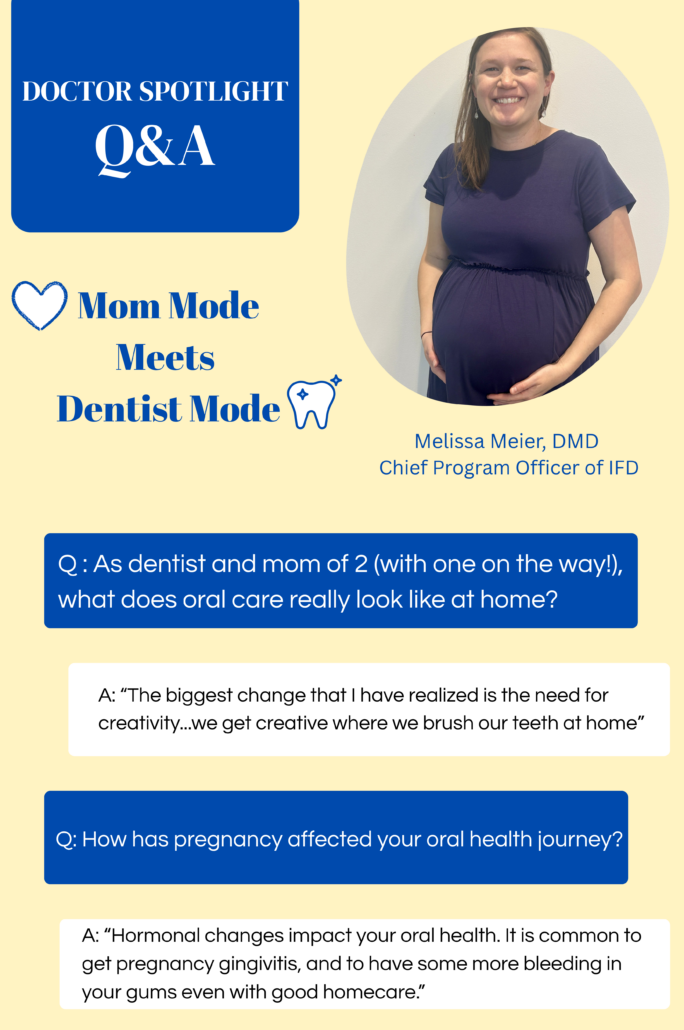
Q: As a dentist and mom of two (with one on the way!), what does oral care really look like at home?
A: Before pregnancy and children, I had a very consistent oral health routine: brushing twice a day, once in the morning after breakfast and again in the evening before bed, and flossing as part of my nighttime routine.
During my pregnancies and now while raising children, the biggest change I’ve experienced is the need for flexibility and creativity.
With each pregnancy, I had the “typical” symptoms. During the first trimester, nausea made it difficult to brush early in the morning, so I quickly learned to shift my routine to later in the day. At night, I was often so tired that I’d fall asleep early, sometimes even before brushing. So, I adjusted my timing: I now brush a little later in the morning, once the nausea subsides, and I brush and floss earlier in the evening, shortly after dinner, so I don’t miss it.
When it comes to caring for our kids’ teeth, it can be hard to keep up with their energy and get them to stay still long enough to brush. So, we get creative, sometimes brushing in different spots around the house or turning it into a fun activity, especially when they have lots of wiggles to burn off.
Q: How has pregnancy affected your oral health journey?
A: It’s very common for pregnant women, myself included, to notice how hormonal changes impact oral health. Pregnancy gingivitis is common, and you may experience more gum bleeding, even with good at-home care.
One thing I want all pregnant women to know is how safe, and important, it is to see your dentist during all trimesters. This includes routine cleanings, checkups, and even emergency care when needed.
Maintaining good oral health during pregnancy can also help reduce the risk of preterm delivery and low birth weight for the baby.

Through a collaboration with the Rutherford Opioid Board, patients and families gain access to opioid misuse screening, education on safe storage and disposal of medications, and life‑saving tools like naloxone, alongside essential dental care. It also allows us to provide restorative dental treatment for individuals in recovery, helping repair the oral health damage that can accompany substance use and supporting confidence, comfort, and long‑term stability.
Together with the Rutherford Opioid Board, we are addressing the opioid crisis through prevention, harm reduction, and recovery‑focused care, strengthening individual health while helping repair the broader impact of opioid use on our community. Click here to learn more!
The Rutherford Opioid Board partners with many great organizations that offer support to those who need it.
Visit Prevention Coalition for Success or Volunteer Behavioral Health for more information.
211 is a free and confidential service that connects people to the local resources they need. 211 can be accessed by phone or computer. A toll-free call to 211 connects you to a community resource specialist in your area who can put you in touch with local organizations that provide critical services that can improve—and save—lives.
Second Harvest Food Bank of Middle Tennessee
Click here to find resources in your neighborhood.
Nourish Food Bank
In moments of mental crisis, connection matters. Reaching out, for professional support, a loved one, or community resources, can help lighten the load. Help is available, and you’re not alone in this.
People who work on 988 are based locally in Tennessee and are connected to community-based resources that can help. Help is available anytime.